PPAP, FMEA, and deviations that actually get followed up
Quality
Knows quality like a quality manager with a Six Sigma Black Belt
Like the best quality engineer you have worked with: stays ahead of the audit and never lets a deviation die in a binder.
The FMEA was last updated when the customer demanded it, the PPAP binder is built in a panic before every new part, and deviations are closed administratively rather than for real. Quality work turns reactive, not for lack of will but for lack of time.
What I take off your desk
Concrete work, not promises. Everything is a proposal; you approve.
FMEAs kept alive
When design or process changes I propose updates to the FMEA, so it reflects the product you build today.
PPAP packages without panic
I assemble the material to the PPAP level the customer requires, from documents that already exist.
Deviations to closure
I follow up open deviations, remind about actions falling due, and show the trend over time.
Inspection instructions in step
Control plans and instructions updated when the product changes, not when the auditor finds the gap.
What it looks like
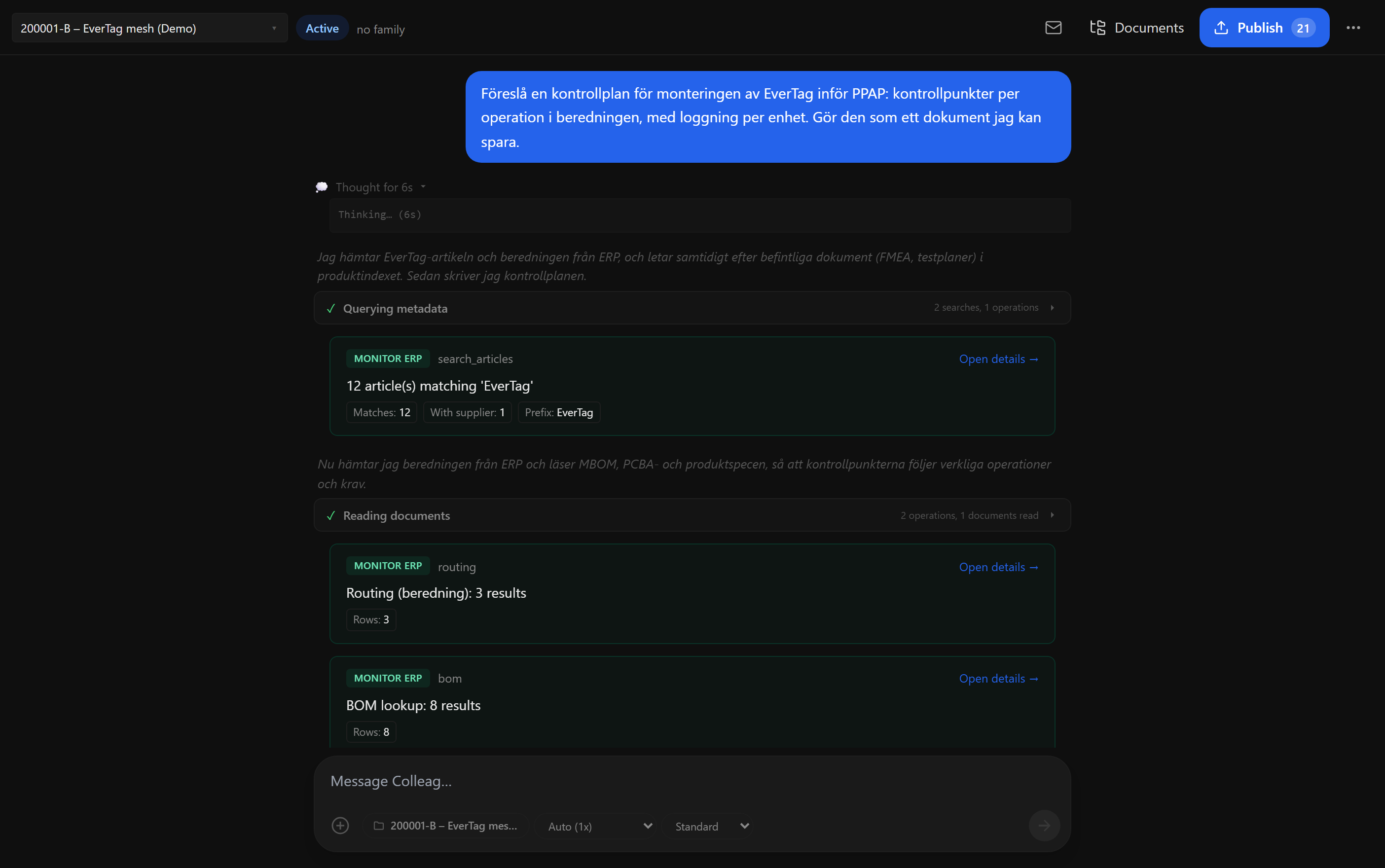
The PPAP control plan built from the routing in the ERP: control points per operation with per-unit logging.
Driven by
- Defects prevented rather than explained
- Quality documents that mirror reality
- Deviations that lead to action
Measured on
How your digital colleagues work
The same rules for every colleague, built in from the start.
They know your business
The colleagues read your own documents and your own business data. No generic answers; your part numbers, your customers, your processes.
They propose, you decide
Every draft and every change goes through you or a flesh-and-blood colleague. Nothing is published without human approval.
Everything is traceable
Every document is a plain file in a version-controlled repository you own. You always see who changed what and why.
You are never locked in
All your knowledge can be exported at any time, in open formats. It is your data, not ours.
More colleagues in Product Development
Curious what it feels like?
We run pilot programs with a few manufacturing companies at a time. Tell us about your business and we will show what the colleagues can do with your documents and your data.