Electronics, PCB, and a BOM that always adds up
Hardware
PhD-level knowledge of electronics design and EMC
Like the best electronics engineer you have worked with: designs for volume production and always knows what can actually be bought.
The design work is the fun part. In between sit BOM clean-up, components going end-of-life mid-project, review material to assemble, and design decisions to justify after the fact to someone who was not in the room.
What I take off your desk
Concrete work, not promises. Everything is a proposal; you approve.
BOM watch
I keep the bill of materials consistent, flag components with lifecycle risk, and document approved alternatives before the shortage turns acute.
Component choices on record
Evaluations and rationales documented while they are fresh, so the choice can be defended two years later.
Review material without evening work
Before the design review I assemble changes, open questions, and affected requirements, so you review instead of searching.
Trade-off analyses
Cost against performance against availability, structured and sourced, instead of a discussion that restarts every time.
What it looks like
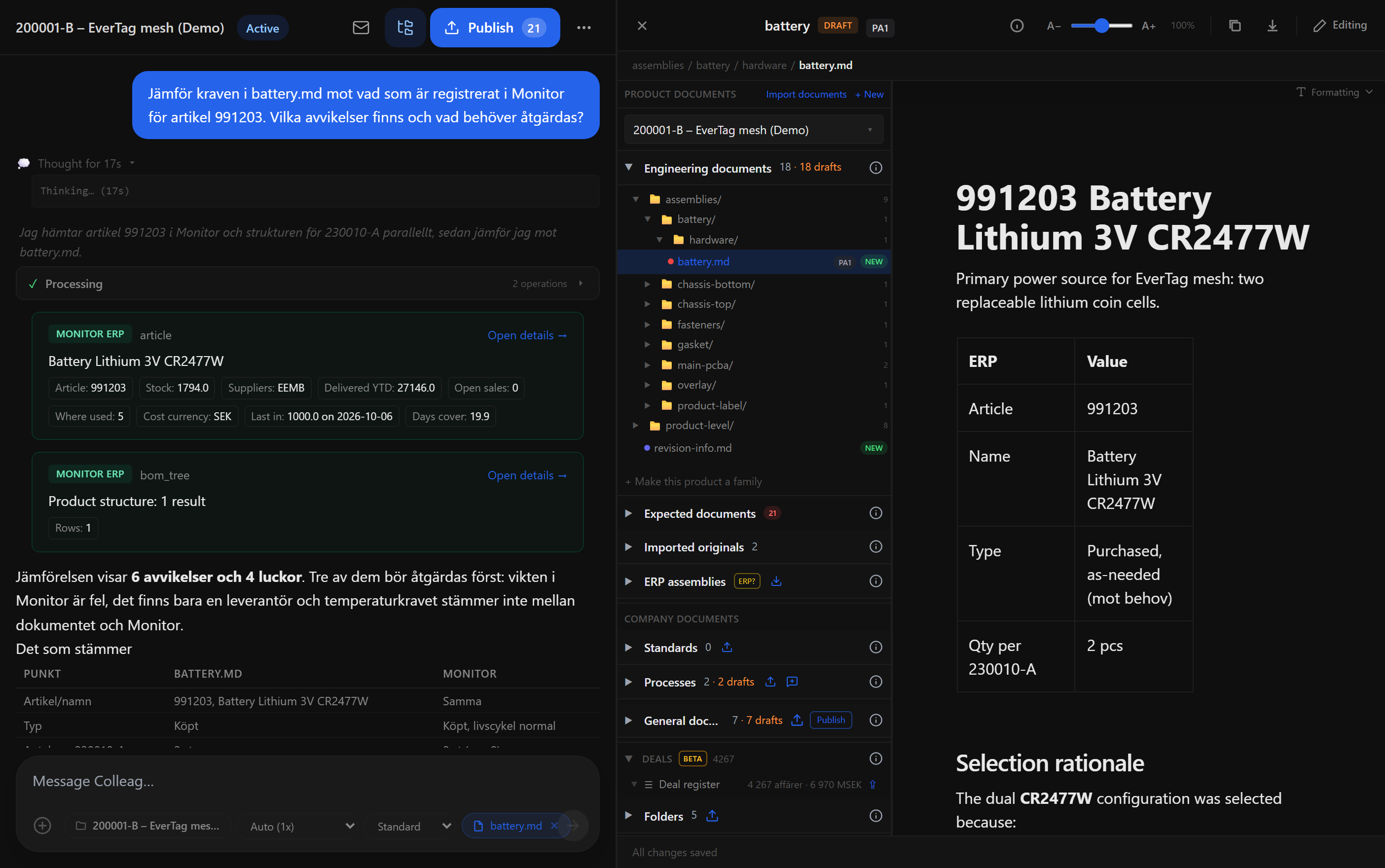
A question about requirements versus the ERP: the colleague fetches the article from the ERP, compares it against battery.md and lists the deviations to fix.
Driven by
- A design that works in volume, not just on the bench
- Component choices that last the product's life
- Traceable design decisions
Measured on
How your digital colleagues work
The same rules for every colleague, built in from the start.
They know your business
The colleagues read your own documents and your own business data. No generic answers; your part numbers, your customers, your processes.
They propose, you decide
Every draft and every change goes through you or a flesh-and-blood colleague. Nothing is published without human approval.
Everything is traceable
Every document is a plain file in a version-controlled repository you own. You always see who changed what and why.
You are never locked in
All your knowledge can be exported at any time, in open formats. It is your data, not ours.
More colleagues in Product Development
Curious what it feels like?
We run pilot programs with a few manufacturing companies at a time. Tell us about your business and we will show what the colleagues can do with your documents and your data.