Mechanics
Drawings against requirements
What a change hits: fit, IP rating, weight. From drawings and material specs instead of from memory.
How you work it in Colleag
- 1
Describe the change: new material, new gasket, changed tolerance.
- 2
The colleague reads the drawings and material specs and traces what is affected.
- 3
Review the list: affected dimensions, requirements and what needs verification.
- 4
Let the colleague draft the change note; you approve.
A worked example
“Does the enclosure still meet IP65 if we switch to the gasket in article 4471?”
A walkthrough of the gasket's material and dimensions against the enclosure groove and the IP requirement, with what needs verification in test. Every claim points at the drawing or spec it comes from.
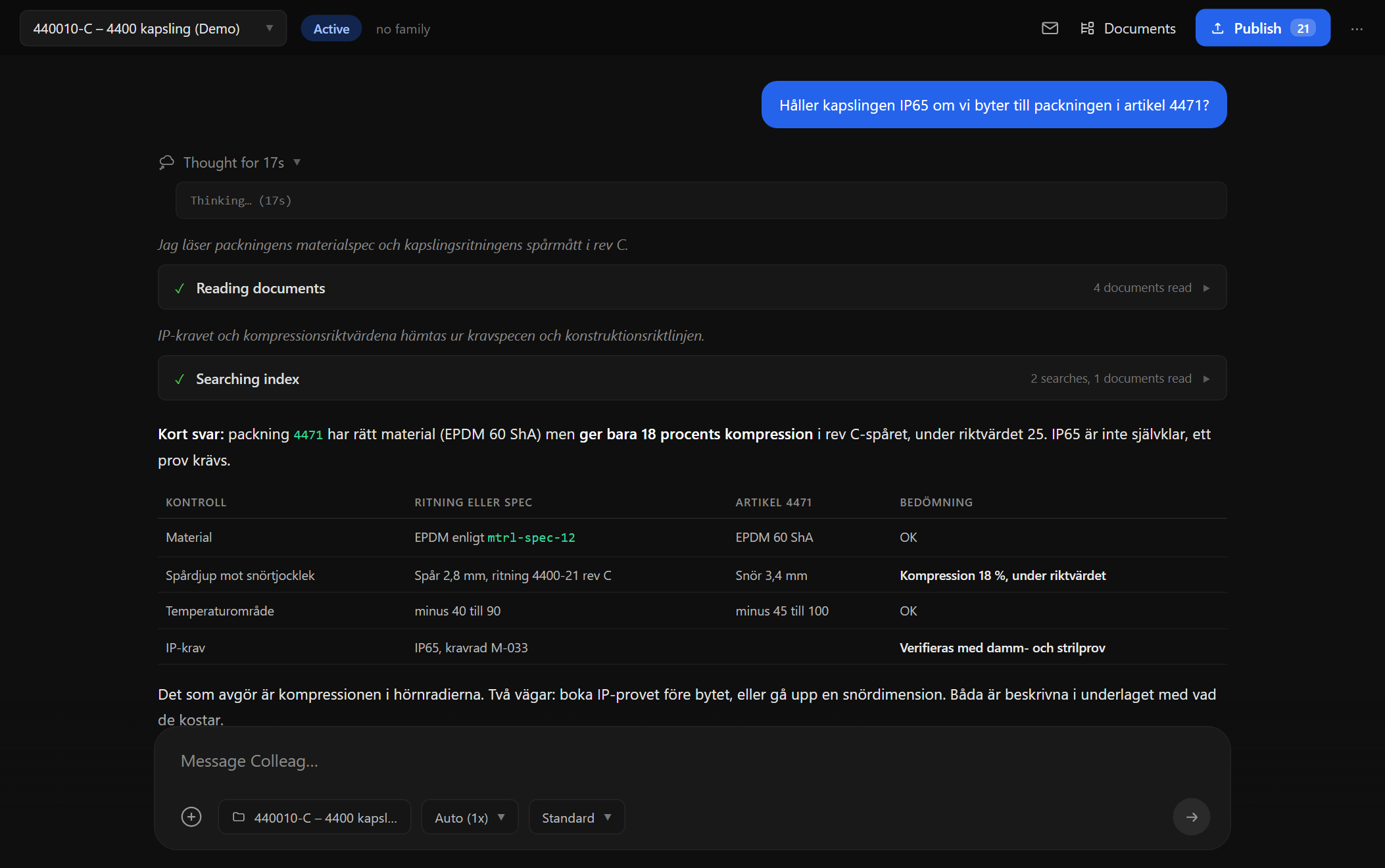
Screenshot from Colleag. The example uses invented figures.
The material
- Drawings and 3D material in the workspace
- Material specifications
- IP and environmental requirements in the spec
You approve
Everything the colleague produces is a proposal with sources. Nothing is published, sent or saved to the archive without a human approving it, and every figure traces to its material.
More from Mechanics
Curious what it feels like?
We run pilot programs with a few manufacturing companies at a time. Tell us about your business and we will show what the colleagues can do with your documents and your data.