Mechanics
Tolerance chains traceable
The calculations and assumptions versioned in the archive, so the next change does not start with archaeology.
How you work it in Colleag
- 1
Ask the colleague to document the tolerance chain for a fit.
- 2
The colleague reads the drawings and existing calculations and structures the chain.
- 3
Review the assumptions; they are what usually get forgotten.
- 4
Approve; at the next change the colleague shows what affects the chain.
A worked example
“Which tolerances govern the fit between enclosure and lid?”
The chain with its dimensions, tolerances and assumptions, taken from the drawings and the latest calculation, every value traceable to its source. If a dimension changes later, the colleague flags what is affected.
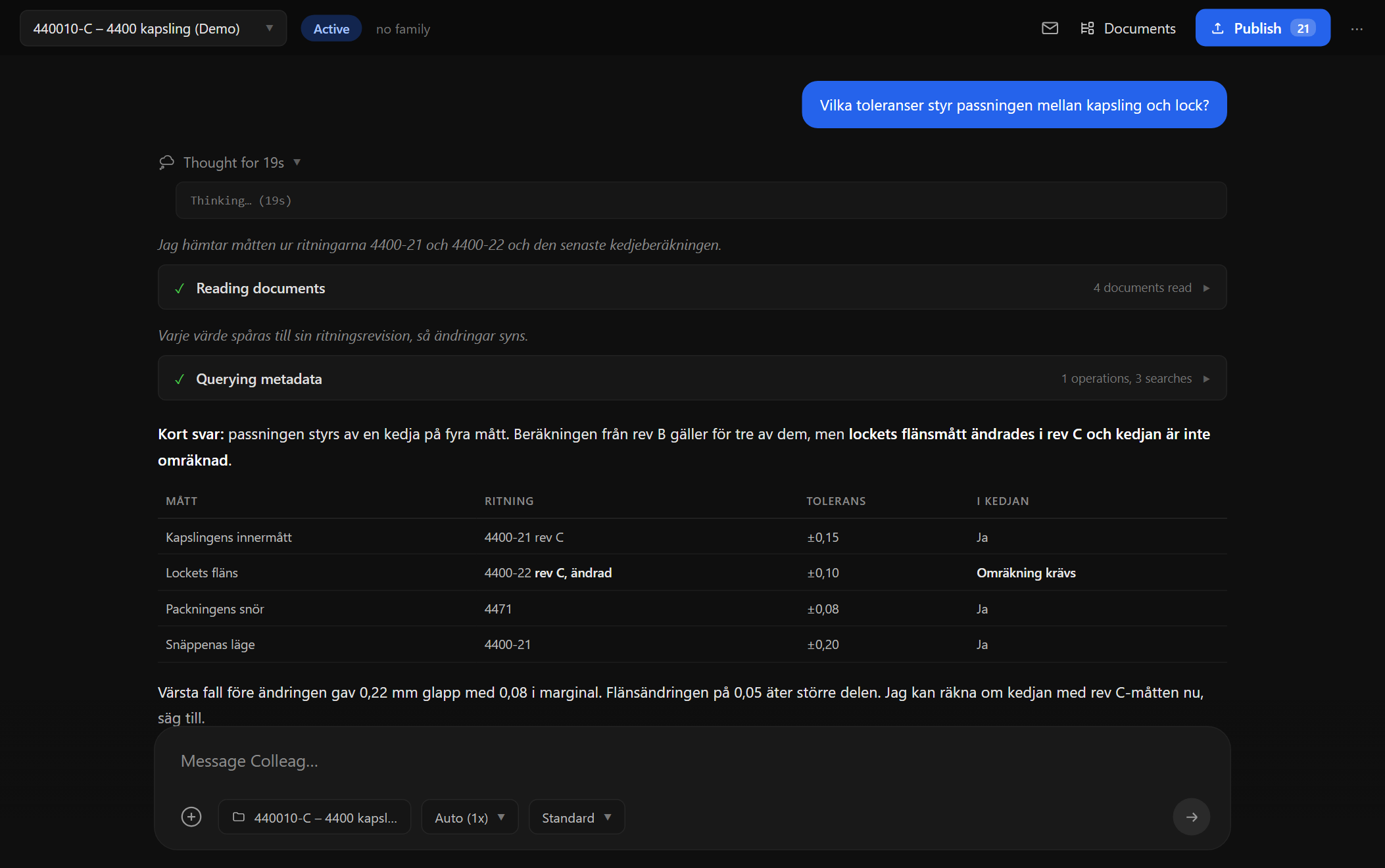
Screenshot from Colleag. The example uses invented figures.
The material
- Drawings with tolerances
- Earlier tolerance calculations
- Fit requirements in the design documentation
You approve
Everything the colleague produces is a proposal with sources. Nothing is published, sent or saved to the archive without a human approving it, and every figure traces to its material.
More from Mechanics
Curious what it feels like?
We run pilot programs with a few manufacturing companies at a time. Tell us about your business and we will show what the colleagues can do with your documents and your data.