BOM, sourcing, and lead times under control
Supply Chain
Supply chain manager
Knows logistics like a veteran supply chain manager
Like the best supply chain specialist you have worked with: sees the shortage six weeks before it stops the line.
How long will stock last, what is on its way in, and what did the supplier actually promise? The answers are in the business system but get collected into a spreadsheet on Fridays, and the shortage shows up when the pick list cannot be filled.
What I take off your desk
Concrete work, not promises. Everything is a proposal; you approve.
What it looks like
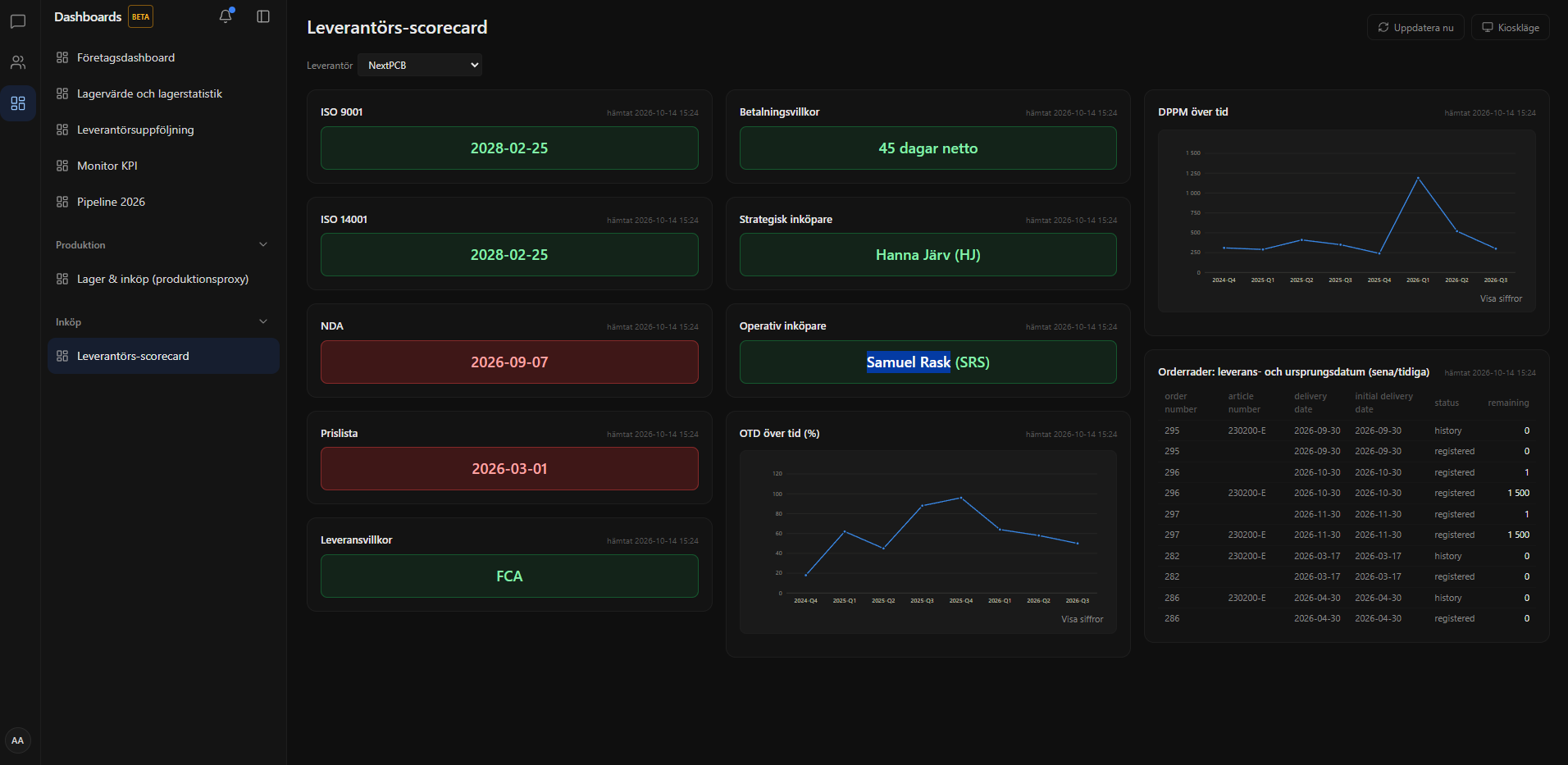
The supplier scorecard in Colleag Dashboards: certificates, terms, delivery precision and order lines, fetched straight from the ERP.
From the day to day
Invented examples, but the form is real: a question, the material the colleague reads, and an answer with sources.
“Circuit board 230010 for the X200 is below the reorder point. How long will it last?”
The colleague reads stock, open orders and planning parameters in the business system, and answers with coverage in days, incoming deliveries and what the figure rests on. You order in time instead of discovering the shortage on the pick list.
“The quarterly meeting with the suppliers of the X200 circuit boards is next week. How have they performed?”
The colleague reads delivery precision, quality deviations, complaints and lead-time outcomes per supplier, and builds a scorecard per supplier in a dashboard with a trend per quarter. The meeting starts from the same figures for both parties, and the ones needing a development plan stand out immediately.
“The spring shortage of 230010 happened because the lead time in the system was eight weeks too short. What else is wrong?”
The colleague reads consumption, value, registered lead times and actual outcomes in the purchasing history, and answers with articles in the wrong ABC class and lead times that deviate from reality, with proposed new values. The next shortage is prevented in the article register instead of in the crisis meeting.
Driven by
- Material in place when production needs it
- An AVL that mirrors reality
- Alternatives ready before the crisis
Measured on
How your digital colleagues work
The same rules for every colleague, built in from the start.
They know your business
The colleagues read your own documents and your own business data. No generic answers; your part numbers, your customers, your processes.
They propose, you decide
Every draft and every change goes through you or a flesh-and-blood colleague. Nothing is published without human approval.
Everything is traceable
Every document is a plain file in a version-controlled repository you own. You always see who changed what and why.
You are never locked in
All your knowledge can be exported at any time, in open formats. It is your data, not ours.
More colleagues in Operations
Curious what it feels like?
We run pilot programs with a few manufacturing companies at a time. Tell us about your business and we will show what the colleagues can do with your documents and your data.