NPI, process planning, and production readiness per product
Manufacturing
Knows the shop floor like a lean-raised production manager
Like the best manufacturing engineer you have worked with: knows exactly what is missing before the product can be built.
A new product heading for production: the checklist lives in a spreadsheet, the assembly instructions are written at the last minute, and the DFM feedback from the previous project was forgotten again. The production start becomes a negotiation instead of a checklist.
What I take off your desk
Concrete work, not promises. Everything is a proposal; you approve.
NPI status in black and white
I keep production readiness visible per product: what is done, what is missing, and who owns it.
Instruction drafts from the design
Assembly and work instructions drafted from drawings and the BOM, ready for the process engineer to polish.
DFM feedback that survives
Manufacturability feedback documented and reused in the next project, not buried in meeting minutes.
Changes out to the line
When the design changes I propose updates to process plans and instructions, so the line never builds to the wrong revision.
What it looks like
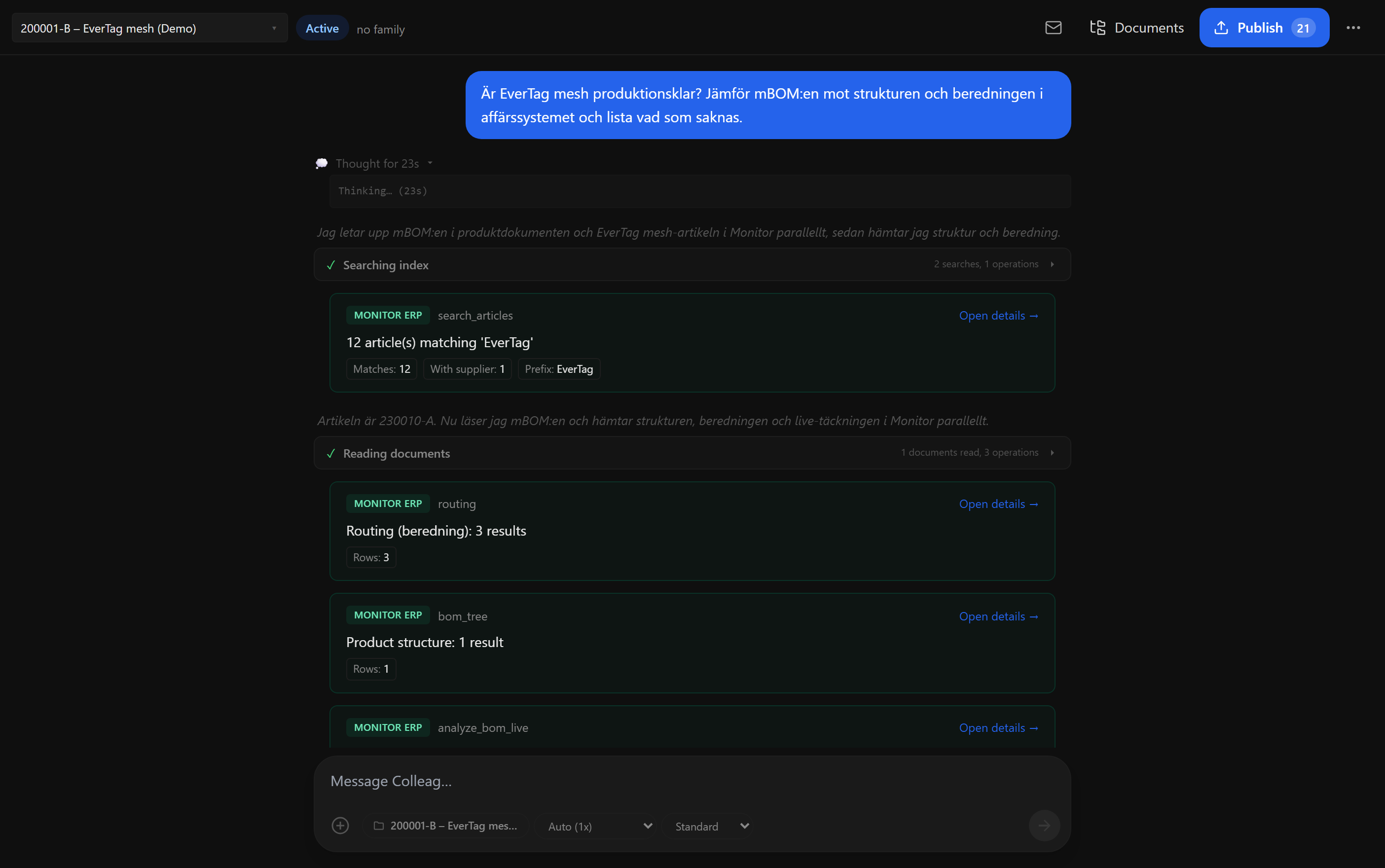
Production readiness assessed: the mBOM compared against the structure and routing in the ERP, with the list of what is missing.
Driven by
- Products that can be built rationally
- Production starts without surprises
- Instructions the operator can actually follow
Measured on
How your digital colleagues work
The same rules for every colleague, built in from the start.
They know your business
The colleagues read your own documents and your own business data. No generic answers; your part numbers, your customers, your processes.
They propose, you decide
Every draft and every change goes through you or a flesh-and-blood colleague. Nothing is published without human approval.
Everything is traceable
Every document is a plain file in a version-controlled repository you own. You always see who changed what and why.
You are never locked in
All your knowledge can be exported at any time, in open formats. It is your data, not ours.
More colleagues in Operations
Curious what it feels like?
We run pilot programs with a few manufacturing companies at a time. Tell us about your business and we will show what the colleagues can do with your documents and your data.