Software
Architecture decisions as documents
Decision drafts from your existing documents and your standard, so decisions live in the archive and not in heads.
How you work it in Colleag
- 1
Describe the decision to be made to the colleague.
- 2
The colleague reads your architecture documents and your standard and drafts the decision with options and consequences.
- 3
Review, choose and add your reasoning.
- 4
Approve; the decision is versioned and can be found in a year.
A worked example
“Draft an architecture decision record for the logging.”
A decision draft in your template: background, options, consequences and a proposal, built on your existing documents and your standard. You make the decision; the colleague writes it down.
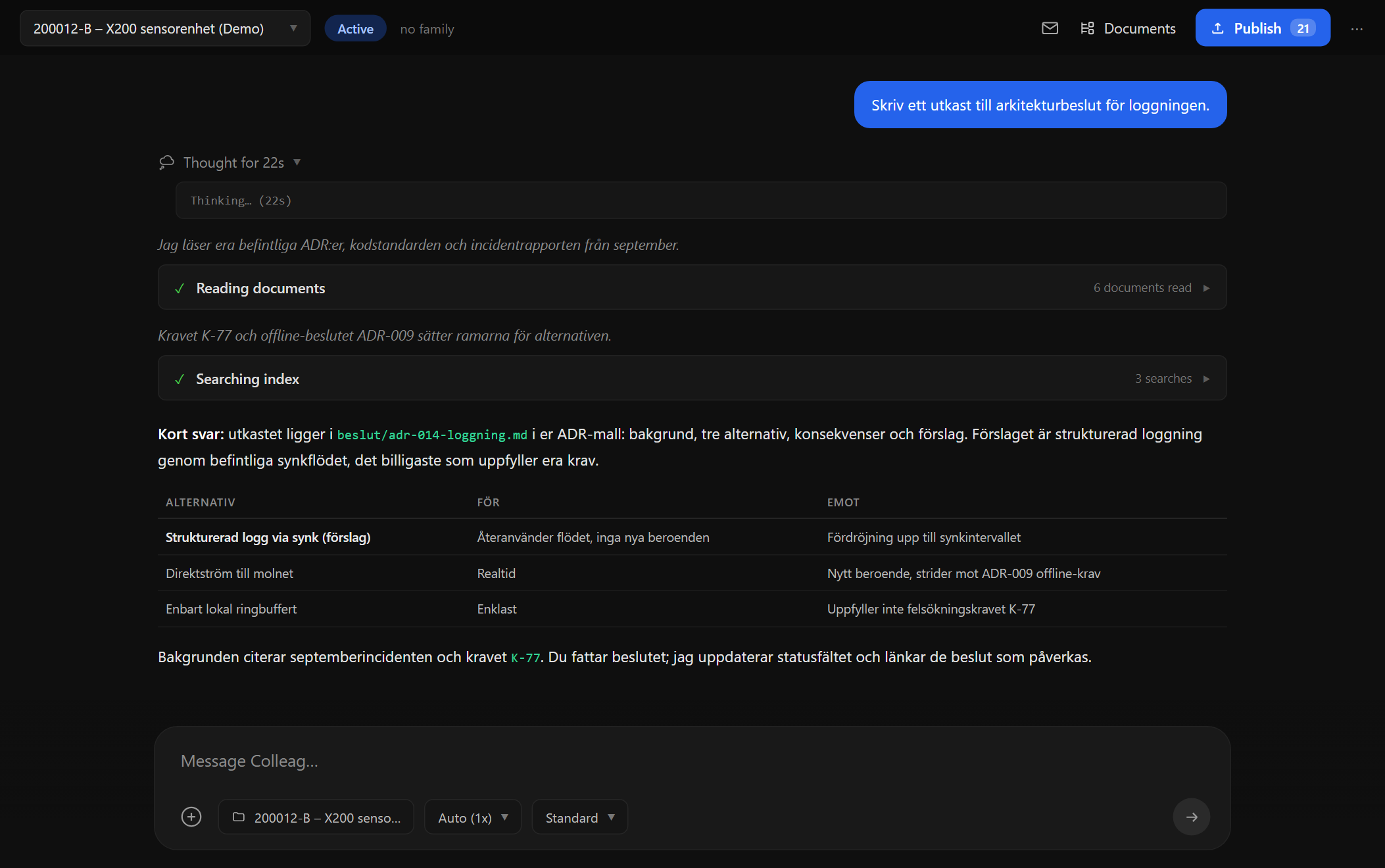
Screenshot from Colleag. The example uses invented figures.
The material
- Your architecture documents
- Your coding standard and guidelines
- Earlier decisions in the archive
You approve
Everything the colleague produces is a proposal with sources. Nothing is published, sent or saved to the archive without a human approving it, and every figure traces to its material.
Curious what it feels like?
We run pilot programs with a few manufacturing companies at a time. Tell us about your business and we will show what the colleagues can do with your documents and your data.