EHS
Sustainability KPIs
Material, transports and scrap from the business system, per produced unit, without the annual Excel collection.
How you work it in Colleag
- 1
Define the KPIs: emissions, material, scrap per unit.
- 2
The colleague reads purchased volumes, material data, transports and scrap.
- 3
Review the figures and the trend.
- 4
Save as a dashboard; reporting draws from here.
A worked example
“What were our emissions and material consumption per produced unit last quarter?”
KPIs per article and supplier built on actual volumes from the business system, trend against the previous period and the biggest items pointed out. Assumptions, such as emission factors, are reported openly.
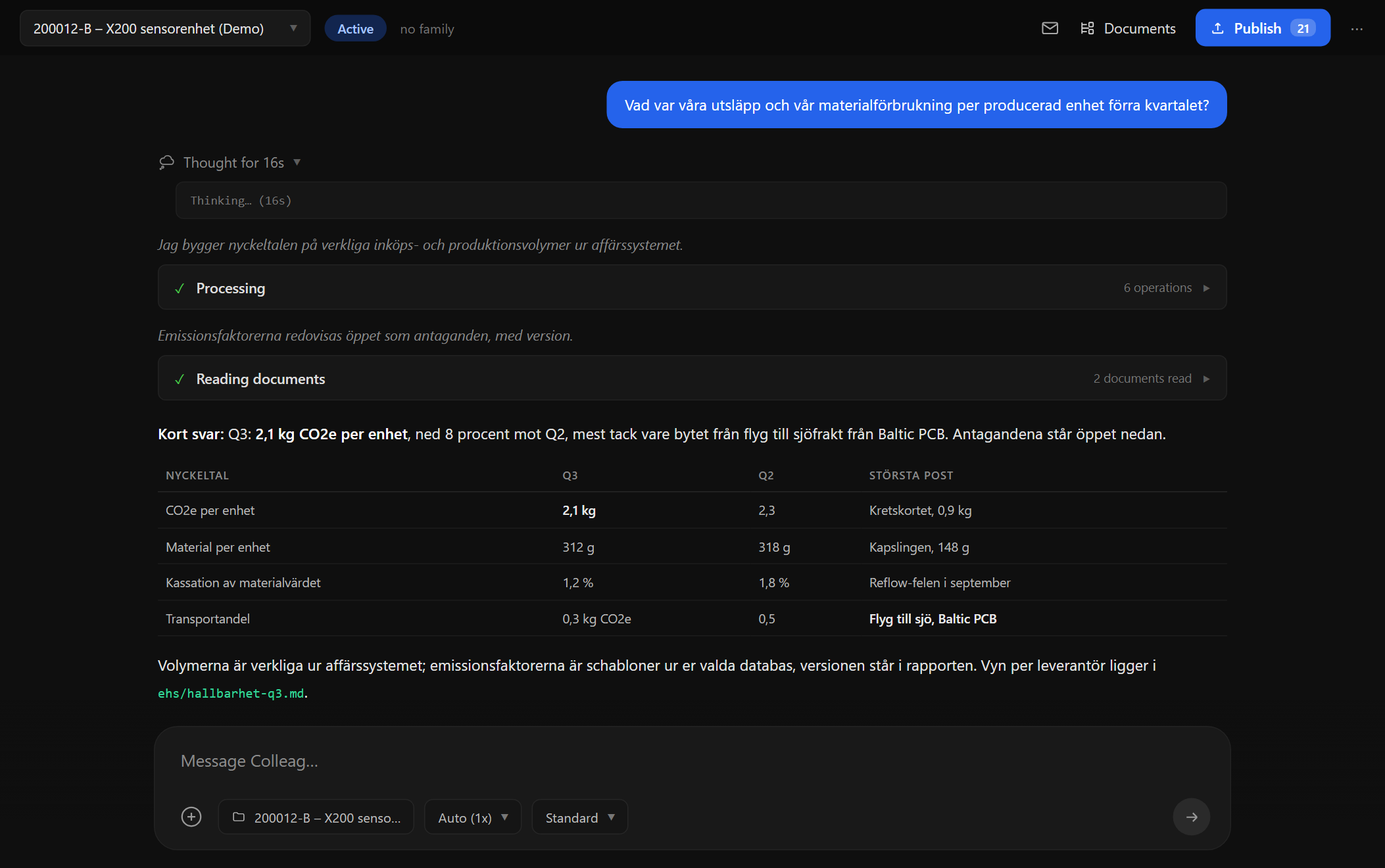
Screenshot from Colleag. The example uses invented figures.
The material
- Purchase volumes and material data
- Scrap and transports
- Production volumes
You approve
Everything the colleague produces is a proposal with sources. Nothing is published, sent or saved to the archive without a human approving it, and every figure traces to its material.
Curious what it feels like?
We run pilot programs with a few manufacturing companies at a time. Tell us about your business and we will show what the colleagues can do with your documents and your data.