Work environment, incidents, and risk assessments
EHS
EHS and sustainability manager
Knows EHS like an engineer who carries the regulations in memory
Like the best EHS coordinator you have worked with: sees the pattern in the incidents and lets no action go until it is closed.
Incidents are reported on paper and compiled before the safety committee. The trend is discovered when someone counts, once a year.
What I take off your desk
Concrete work, not promises. Everything is a proposal; you approve.
What it looks like
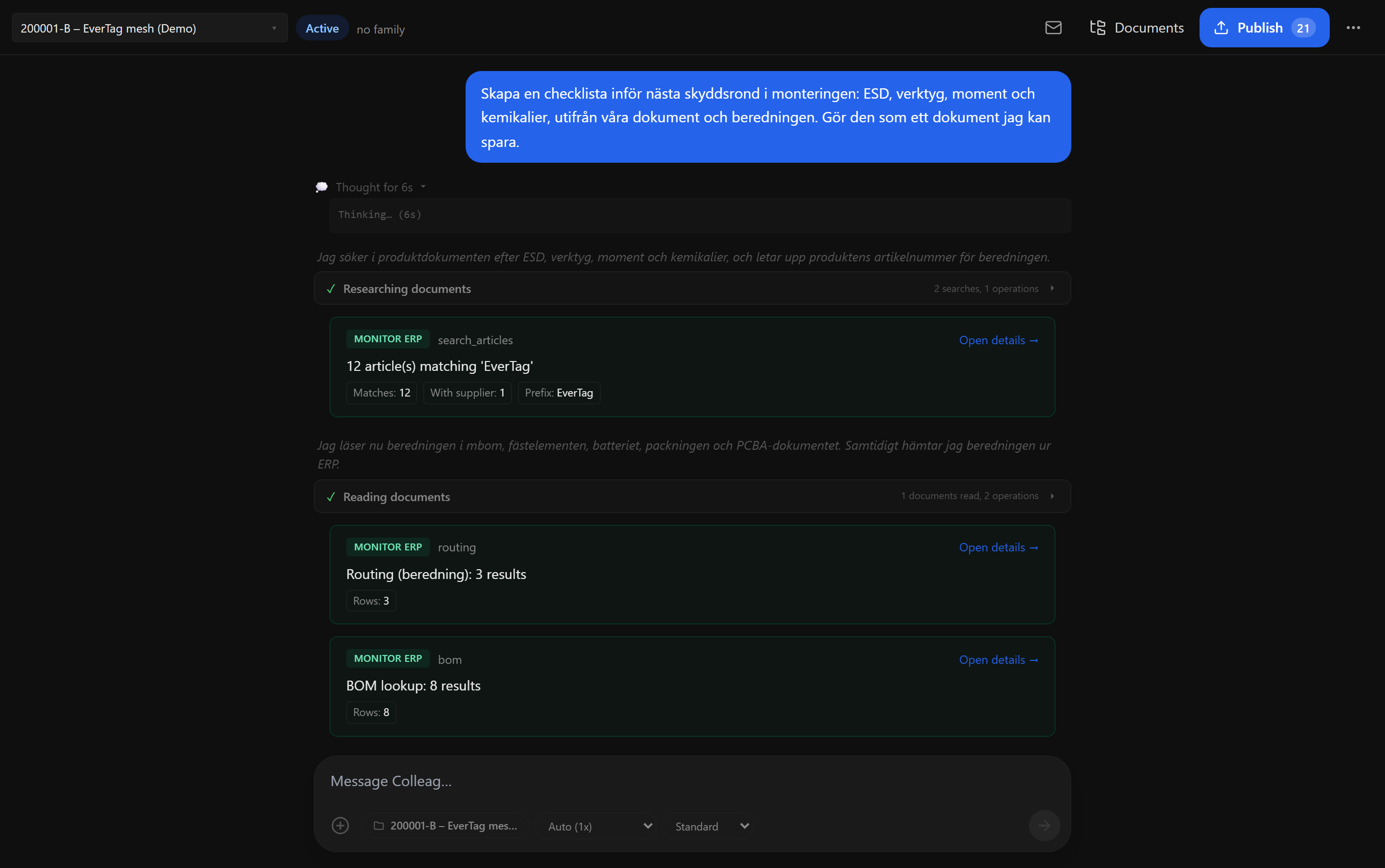
The safety-round checklist built from the routing and component documents: ESD, tools, torques and chemicals.
From the day to day
Invented examples, but the form is real: a question, the material the colleague reads, and an answer with sources.
“The safety committee meets next week and three incidents were reported at the X200 line. Is there a pattern?”
The colleague reads the incident register and answers with the trend per month, where it happens and which actions remain open. The meeting is about actions, not about counting.
“A grid customer wants climate data for the X200 in their procurement. What do we have?”
The colleague reads the bill of materials, purchased volumes, transports and scrap in the business system, and answers with data per article and supplier and where the largest items sit. You answer with your own data instead of standard factors, and see where an improvement makes the biggest difference.
“Management review under ISO 14001 is in two weeks. Where do we stand against the environmental targets?”
The colleague puts the outcomes in the business system against the environmental targets and the significant environmental aspects, and answers with fulfilment per target and deviations needing action. The material is ready when the auditor asks.
Driven by
- Zero serious accidents
- Incidents that lead to change
- Compliance without surprises
Measured on
How your digital colleagues work
The same rules for every colleague, built in from the start.
They know your business
The colleagues read your own documents and your own business data. No generic answers; your part numbers, your customers, your processes.
They propose, you decide
Every draft and every change goes through you or a flesh-and-blood colleague. Nothing is published without human approval.
Everything is traceable
Every document is a plain file in a version-controlled repository you own. You always see who changed what and why.
You are never locked in
All your knowledge can be exported at any time, in open formats. It is your data, not ours.
More colleagues in Quality System
Curious what it feels like?
We run pilot programs with a few manufacturing companies at a time. Tell us about your business and we will show what the colleagues can do with your documents and your data.