Procurement
Where a second source matters most
Not every single source is equally dangerous. Sort them by what they actually control.
How you work it in Colleag
- 1
Ask for the single-source analysis.
- 2
The colleague reads supplier links, lead times and status.
- 3
Each article is weighed against the backlog it affects.
- 4
The list becomes the work order for second-source work.
A worked example
“Which single-source articles control the largest share of our order backlog?”
The articles sorted by affected backlog, with lead time, life-cycle status and supplier per line.
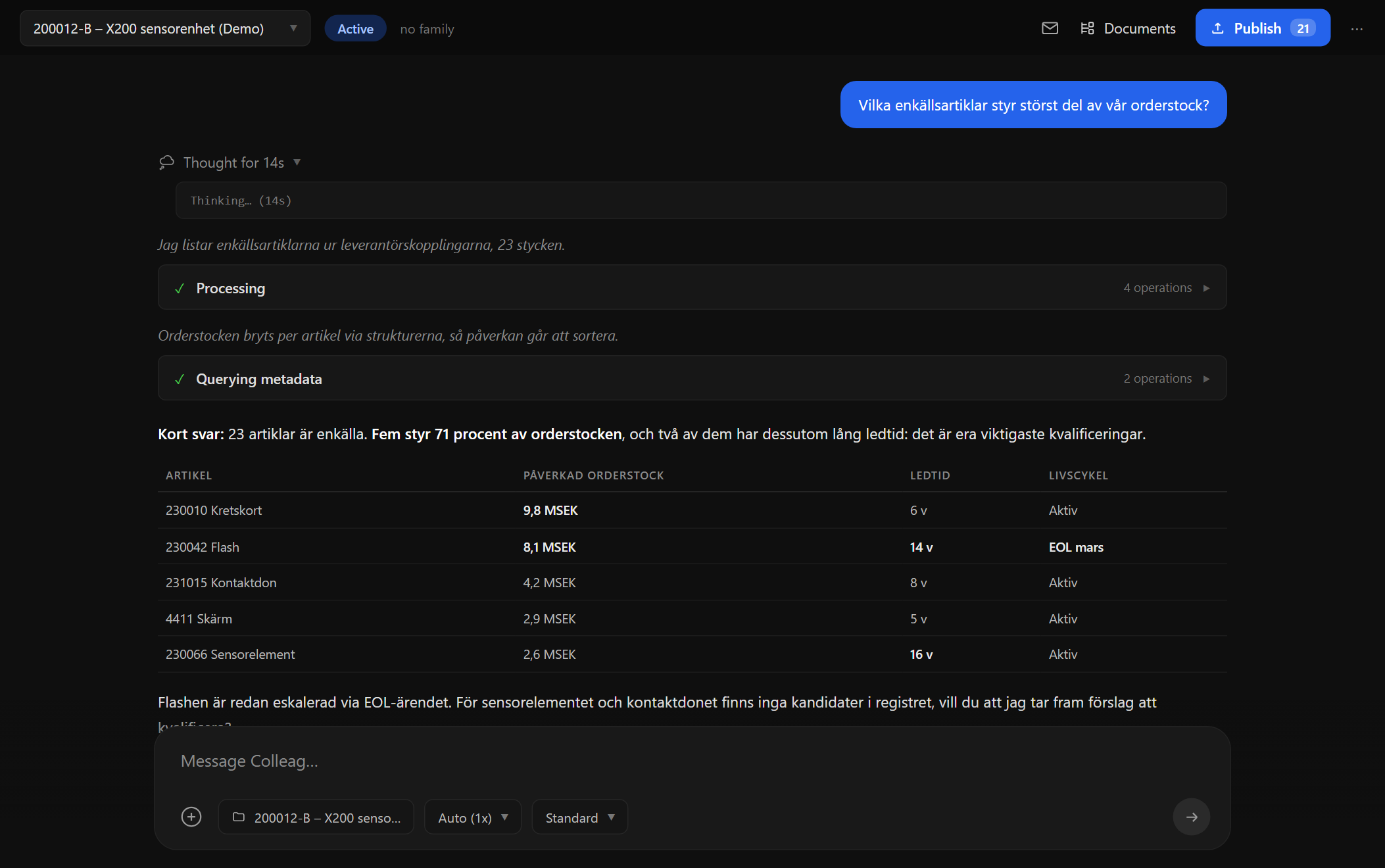
Screenshot from Colleag. The example uses invented figures.
The material
- The supplier links
- The order backlog in the business system
- Lead times and life-cycle status
You approve
Everything the colleague produces is a proposal with sources. Nothing is published, sent or saved to the archive without a human approving it, and every figure traces to its material.
Curious what it feels like?
We run pilot programs with a few manufacturing companies at a time. Tell us about your business and we will show what the colleagues can do with your documents and your data.